

Best Flexible Packaging for Exporting Rice, Spices, and Grains
Export food products travel a lot further than anything sold locally. Moisture, oxygen, pests, rough handling, and weeks at sea all take a shot at your product before it even reaches the buyer.
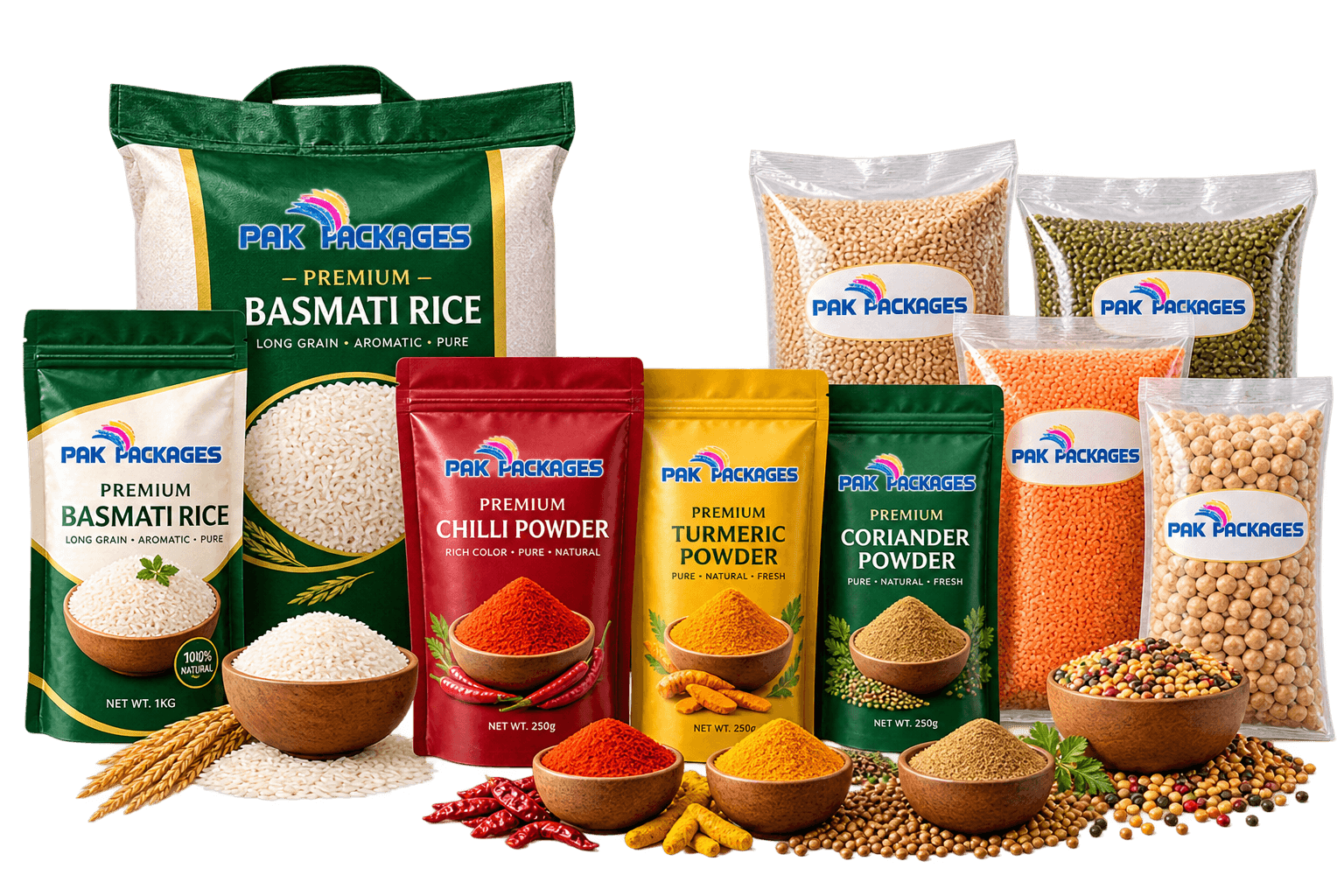
What about a delivery where the rice and spice packets were wet, or the scent of the spices was halved before the goods got to the consumer? This is something that occurs far too frequently for exporters to be comfortable admitting it, but it always boils down to one factor: improper packaging.
Export food products travel a lot further than anything sold locally. Moisture, oxygen, pests, rough handling, and weeks at sea all take a shot at your product before it even reaches the buyer. So the quick answer to "what's the best flexible packaging for rice, spices and grains export" is that it genuinely depends on your product, your shipment size, and where it's headed. There's no single bag that fits every order, and at Pak Packages we tell clients exactly that on the first call.
What Makes Packaging Suitable for Food Exports?
Before picking a bag or pouch, it helps to know what you're actually protecting against. Good export packaging needs to handle:
- Moisture protection, so nothing gets damp mid-shipment
- Oxygen and aroma barrier, especially for anything with a smell worth keeping
- Puncture and tear resistance, because loading docks aren't gentle
- Protection during sea or road transport, where bags get stacked, shifted, and jostled for weeks
- Suitable for printing and branding, so the product still looks premium once it lands
Miss any one of these, and you're looking at complaints, rejected shipments, or a buyer who quietly moves to a different supplier next season.
Best Packaging for Rice Export
Rice packaging for export usually comes down to two options, and the right one depends almost entirely on whether you're shipping bulk or retail-ready product. For packaging materials for rice export, the right choice depends on shipment size and destination.
BOPP laminated bags
BOPP laminated bags are the workhorse of bulk rice export. A few reasons they're the default choice:
- Best suited for 5 to 50 kg bags
- High tensile strength that holds up under stacking and handling
- Solid moisture protection thanks to the multi-layer laminate
- High-quality printing surface for branding
- A go-to for premium basmati rice exports where presentation matters
PET/PE or PA/PE Pouches
For smaller, retail-facing shipments, pouches make more sense than sacks.
- Ideal for 1 to 5 kg retail rice packs
- Strong puncture resistance for a lighter package
- Works well with vacuum or nitrogen packing
- Better suited for shelf-ready products sitting in a supermarket
Best Packaging for Spice Export
Spice packaging is a different challenge altogether. Aroma and color fade fast once oxygen and light get involved, so spice packaging needs a tighter barrier than most food products.
PET/Aluminum Foil/PE
This structure is the gold standard for anything where aroma matters.
- Strong oxygen and moisture barrier through the aluminum foil layer
- Locks in aroma so the product still smells right on arrival
- Blocks light completely, which protects color and potency
- Best fit for ground spices, which lose flavor the fastest
PET/VMPET/PE
When the budget doesn't stretch to foil, this is the practical alternative.
- Lower cost than a full aluminum foil laminate
- Still offers decent light and moisture protection
- Works well for retail spice pouches
- Available in stand-up and zipper formats buyers actually like reusing
Best Packaging for Grain and Pulse Export
Grains and pulses move in bigger volumes, so the priority shifts toward strength and bulk handling rather than shelf appeal.
Woven PP Bags with PE Liners
- Suited for 25 to 50 kg bags
- Strong outer structure that survives rough handling
- An LDPE liner inside adds a real moisture barrier
- Built for bulk transportation, not retail shelves
Hermetic In-Container Liners
For very large shipments, this is where hermetic packaging comes in.
- Designed for large-volume, container-level shipments
- Limits air and moisture exchange inside the container
- Especially useful on long sea voyages where conditions inside a container can swing a lot
Rice vs Spices vs Grains: Which Packaging Should You Choose?
| Product | Recommended Packaging | Main Protection | Best Format |
|---|---|---|---|
| Bulk Rice | Woven PP + PE liner | Strength + moisture | 20 to 50 kg bag |
| Retail Rice | BOPP / PET / PE | Branding + barrier | 1 to 5 kg pouch/bag |
| Ground Spices | PET / Foil / PE | Aroma + oxygen + light | Stand-up pouch |
| Whole Spices | PET / PE | Product visibility + basic barrier | Pillow/gusset pouch |
| Bulk Grains | Woven PP + PE liner | Tear + moisture protection | 25 to 50 kg sack |
Bulk Export Packaging vs Retail Packaging
This is worth thinking through early, because it shapes almost every packaging decision after it.
| Factor | Bulk Export | Retail Export |
|---|---|---|
| Typical quantity | 20 to 50 kg | 1 to 5 kg |
| Priority | Strength | Shelf appeal |
| Packaging | Woven sacks/liners | Pouches/bags |
| Printing | Functional branding | High-quality graphics |
| Main concern | Transport protection | Product protection + presentation |
Need help figuring out which one fits your next shipment? Talk to Pak Packages on +92-300-8440248 or info@pakpackages.com, and we'll walk you through it based on your actual order size.
How to Choose the Right Flexible Packaging for Export
A quick checklist before you place your packaging order:
- What product are you exporting?
- What's the package weight?
- How long will it be in transit?
- Will it travel by sea, road, or air?
- Does it need moisture protection?
- Does it need an oxygen or aroma barrier?
- Is this bulk or retail packaging?
- What printing and branding does the product need?
Walking through these questions before you order saves you from finding out the hard way, usually after a container's already at sea.
Common Packaging Problems During Food Export
Even experienced exporters run into these issues:
- Moisture creeping into the package
- Bags tearing during loading or handling
- Spices losing their aroma before arrival
- Oxygen exposure degrading flavor and color
- Poor sealing that lets air in over time
- Packaging damage during long-distance transportation
- Barrier protection that simply wasn't strong enough for the trip
Most of these trace back to one root cause: the wrong material structure for the product and the journey. A PET/PE laminate built for a short domestic trip won't hold up on a six-week sea voyage, and a bag with no EVOH or foil layer won't protect aroma no matter how well it's sealed. Getting the layers right from the start solves most of these problems before they happen.
Frequently Asked Questions
What packaging is most suitable for exporting spices?
PET/aluminum foil/PE is the best combination for protecting aroma, moisture, and light. PET/VMPET/PE is a reliable alternative at a lower cost.
How do you protect rice from moisture when exporting it?
It can be protected using a multi-layer laminate packaging system with a moisture barrier, such as a woven PP bag with PE lining.
What is the difference between bulk packaging and retail export packaging?
The main difference between bulk packaging and retail packaging is the size and protective aspects of the two.
Why should spice packaging have an aluminum foil barrier?
An aluminum foil barrier is completely resistant to oxygen, moisture, and light that could be responsible for loss of aroma and color of ground spices.
What is used as a packaging material for exporting bulk grains?
Standard packaging material for bulk grains export is woven PP bags with PE liners. These may also be supplemented by hermetic liners for shipment in containers across long routes.
Is flexible packaging able to cope with the journey at sea?
Yes, provided that proper barriers are included in its structure. Special hermetic or multi-layer laminates can prevent air and moisture exchange during transportation for long periods.
What is the optimal packaging size for rice or spice retail export?
For rice or spice retail export, 1 to 5 kg pouches are most common.
Final Takeaway
The selection of packaging materials for rice export, spice packaging, or grain packaging is not about selecting the best-looking materials. Rather, it is all about having the right design to suit the particular product type, size, and route that it will follow.
When dealing with bulk shipments, there is a need for durability and moisture resistance more than anything else. For retail packaging, one has to be concerned about product protection, but in a way that looks appealing when placed on shelves thousands of miles away. The level of protection that spices need is better than rice or grains simply due to their nature.
Get this match right, and you cut down on damaged shipments, unhappy buyers, and repeat costs from products that arrived in bad shape. If you're not sure which structure fits your export, Pak Packages can help you work it out based on your product, your volume, and where it's headed. Reach out at info@pakpackages.com or call +92-300-8440248.