

The Importance of Barrier Films in Frozen Food Packaging
Learn how barrier films protect frozen food from freezer burn and odor loss. See materials, key features, and how to pick the right film for your pack.
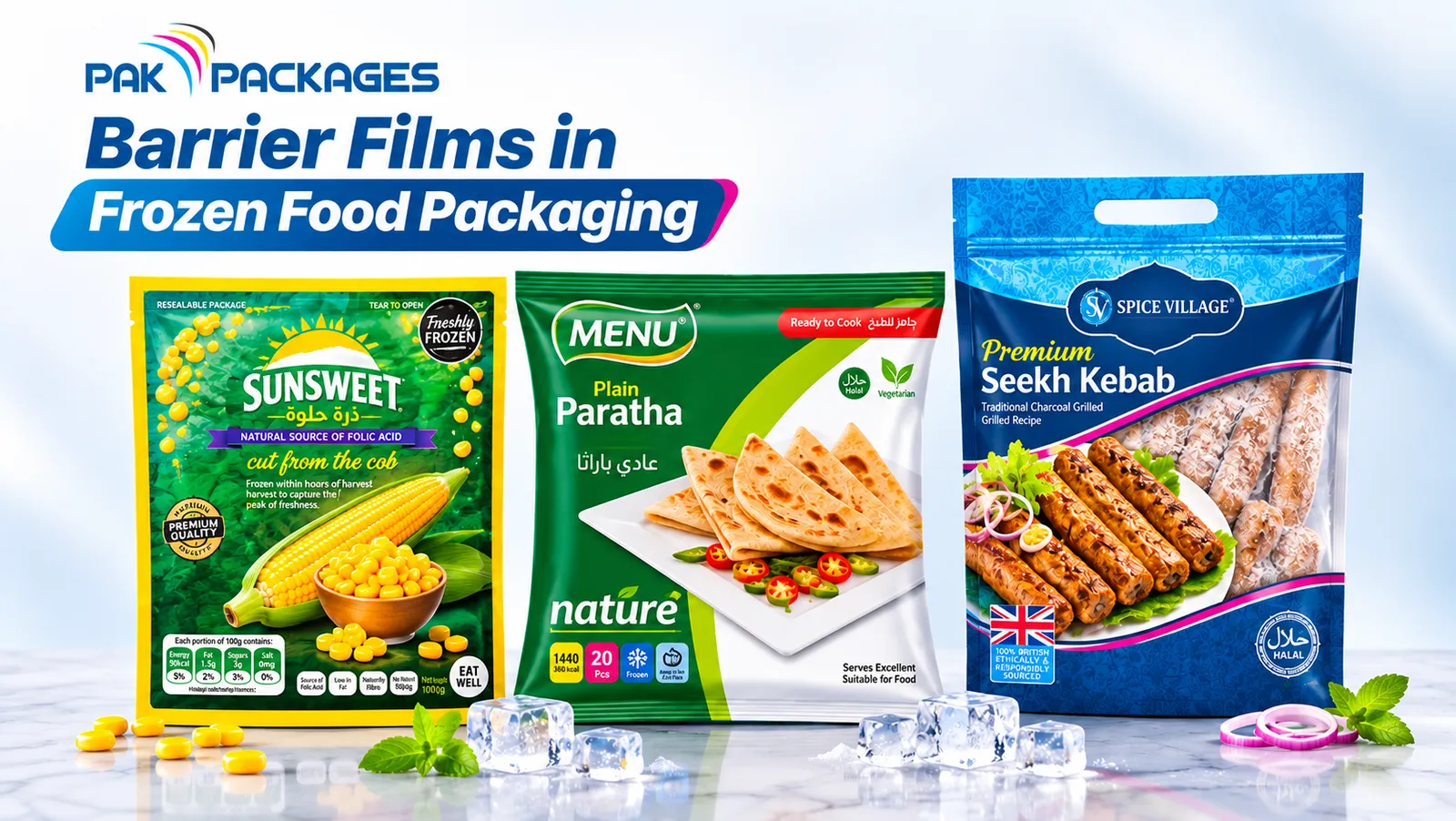
Frozen nuggets, kebabs, parathas, samosas, and vegetables sit in freezers for weeks, sometimes months. During that time, the pack is the only thing standing between the food and damage. That is where barrier films matter. A good barrier film for frozen food packaging blocks moisture, oxygen, and odors, so the food stays fresh until the day it is cooked. A weak film lets in air and dries the food out. At Pak Packages, we see many frozen food brands pick film only by price, then face complaints later. This blog explains what barrier films do, which materials work best, and how to choose the right one.
What Is a Barrier Film?
A barrier film is a multi-layer flexible packaging material that limits how much gas, water vapor, and smell can pass through it. Most films are a laminate, which means two or more thin layers bonded together. Each layer does a different job. One gives strength, one blocks oxygen, one blocks moisture, and the inner layer seals the pack. Together, they work like a shield around the food.
Why Frozen Food Needs Extra Protection
Frozen food looks safe, but it still changes over time. Three problems show up most.
1. Freezer Burn
Freezer burn happens when moisture leaves the food and turns into ice crystals inside the pack. The food gets dry, pale, and tough. A film with a low moisture vapor transmission rate (MVTR) slows this down. This is the first thing buyers notice, and it is the main reason people throw away frozen food.
2. Oxidation and Bad Taste
Oxygen reacts with fats in meat, fish, and fried snacks. This causes oxidation, which brings a stale or rancid taste. A film with a low oxygen transmission rate (OTR) keeps oxygen out. It also holds the flavor in, so a seekh kebab still smells like a seekh kebab.
3. Odor Transfer
Freezers hold many foods at once. Without a good aroma barrier, fish can make ice cream taste strange. A proper barrier layer keeps smells inside each pack.
Why This Matters More in Pakistan
Frozen food in Pakistan faces a tough route. Load shedding can switch off shop freezers. Vans may stop for hours in summer heat. Packs get moved between freezers many times. Each small thaw and refreeze creates more ice crystals and more stress on the film. A strong barrier film cannot fix a broken cold chain, but it gives the food a better chance to survive those short breaks. For small brands that sell through local shops and home delivery, this matters even more.
Common Barrier Film Materials
The right structure depends on the food. These are the materials brands use most.
- PET (polyester) gives strength, clarity, and a good print surface
- Nylon (PA) resists punctures, which helps with bone-in meat and sharp frozen items
- EVOH is a strong oxygen barrier, but it needs protection from moisture
- Metallized film adds a thin metal layer for better barrier at a lower cost than foil
- Aluminium foil gives the highest barrier against oxygen, moisture, and light
- PE (polyethylene) is the sealing layer, and it stays flexible at low temperatures
Barrier Film Comparison
| Material | Oxygen Barrier | Moisture Barrier | Best For |
|---|---|---|---|
| PET | Medium | Medium | Printed outer layer |
| Nylon | Good | Low | Meat, fish, sharp items |
| EVOH | Very high | Low | Oxygen-sensitive foods |
| Metallized film | High | High | Snacks, ready meals |
| Aluminium foil | Highest | Highest | Long storage, premium packs |
| PE | Low | Good | Sealing layer |
Which Frozen Foods Need Which Protection?
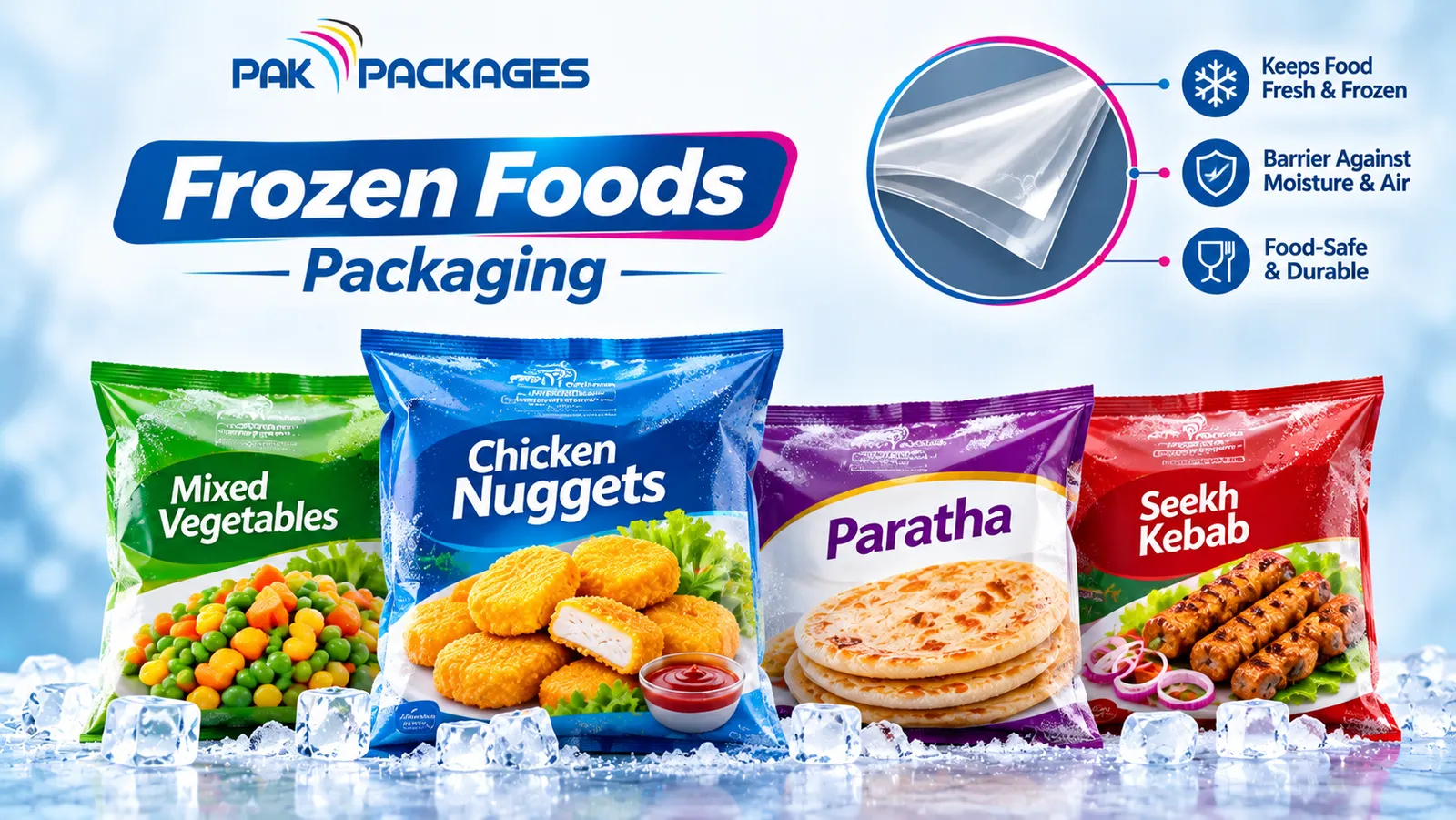
Not all frozen foods ask for the same thing.
- Frozen meat and chicken: need a strong oxygen barrier and puncture resistance
- Fried snacks like nuggets and samosas: need good moisture and fat protection
- Frozen vegetables and fruit: need a moisture barrier to stop frost and clumping
- Ice cream and desserts: need moisture control and a seal that holds in the cold
- Ready meals and parathas: need a balanced barrier and a tough seal
This is a gap many brands miss. They copy the pack of a bigger brand without asking if their food has the same needs.
Features That Matter Beyond the Barrier
A strong barrier is not enough on its own. Frozen packs face rough handling, so check these too.
- Seal strength: weak seals open in the freezer and let air in
- Low-temperature flexibility: cheap films turn brittle at -18°C and crack
- Puncture resistance: needed for nuggets, bones, and frozen vegetables with hard edges
- Anti-fog layer: stops mist from hiding the product through a clear window
- Resealable zipper: lets families close the pack after use, which stops frost from building
If you want custom printed frozen food pouches or rolls, Pak Packages can help you match the structure to your product.
Are Barrier Films Eco-Friendly?
Mostly, no. Multi-layer laminates are hard to recycle, and recycling options in Pakistan are limited. Still, a good barrier film cuts food waste, which is a big part of a pack's footprint. Some suppliers now offer mono-material films that recycle more easily. Ask about them, but test the barrier first, because a thinner structure can fail in the freezer.
How to Choose the Right Barrier Film
Follow these steps before you place an order.
- Check what your food needs: meat needs oxygen protection, ice cream needs moisture control
- Decide how long the product will stay frozen, since longer storage needs a higher barrier
- Test the pack at real freezer temperature, not just at room temperature
- Ask for OTR and MVTR values from your supplier in writing
- Confirm the inner layer is food-grade and meets FDA or Pakistan Standards and Quality Control Authority (PSQCA) rules
- Run a shelf life test on a small batch first
Mistakes Brands Often Make
- Buying the thinnest, cheapest film to cut cost
- Using a film made for dry snacks on frozen food
- Ignoring seal quality while focusing only on barrier numbers
- Skipping low-temperature testing
- Forgetting to ask about MOQ and print lead time
FAQs
What is a barrier film in frozen food packaging?
A barrier film in frozen food packaging is a layered film that blocks moisture, oxygen, and odors from reaching the food.
How do barrier films prevent freezer burn?
Barrier films prevent freezer burn by keeping moisture from leaving the food and forming ice crystals inside the pack.
Which material is best for frozen food packaging?
The best material for frozen food packaging depends on the food, but nylon and PE laminates suit most meat and vegetable packs.
What are OTR and MVTR in packaging?
OTR is the oxygen transmission rate and MVTR is the moisture vapor transmission rate, and lower numbers mean better protection.
Can frozen food packaging be recycled?
Frozen food packaging can be recycled only when it uses mono-material films, because multi-layer laminates are very hard to recycle.
Is food-grade film required for frozen food packaging?
Yes, food-grade film is required for frozen food packaging because the inner layer touches the food directly.
Does a thicker film always give a better barrier?
A thicker film does not always give a better barrier, because the type of material matters more than the thickness.
Conclusion
Barrier films protect frozen food from freezer burn, oxidation, and odor loss. They also protect your brand, because a fresh product brings repeat buyers. Pick the film by food type, storage time, and handling, then test it in real freezer conditions. For custom barrier packaging made for your frozen products, call Pak Packages at +92-42-35114103.